


The Province of Antwerp’s Drought Committee is calling for as much water as possible to be retained in the landscape. In practical terms, this means:
- Closing the weirs
- Shutting off level-controlled drainage systems
- Limiting drainage
- Fill the water tank to capacity
The reason for this appeal is the low to very low groundwater levels across a large part of the province. The shallow groundwater has not been sufficiently replenished this winter, which could have serious consequences in the event of a dry spring or summer. The buffer that is normally present – and from which your crops also benefit – has not yet been replenished.
What can you do:
You can help water to infiltrate by closing off weirs and drainage channels. Of course, you’ll need to take into account the situation on your plot, as this varies from place to place.
Before you open the drainage, check each plot individually to ensure that the groundwater level is actually too high to enter the field! Surface puddles are not a reliable indicator of this: they can also form after rain due to soil compaction or simply slow infiltration. In some places it is already wet, but in most places the groundwater level is still low.
How do you check the water level?
You can see the water level in the field from the monitoring well of your level-controlled drainage system. Please note that the well must not be lower than the field, as this will give a distorted reading. Alternatively, you can dig a small monitoring well using a post hole digger to check the water level in the first metre below ground level. In small field ditches, the water level can also serve as an indication, provided it has not rained and they are not carrying off drainage water from upstream.
What about weirs?
Do you have canals with (adjustable) weirs? If so, raise the water level. This allows the water that does not drain away to seep into the groundwater. If the ground is already fairly wet, set the weir level low. This ensures that some of the water still infiltrates the ground, whilst allowing excess rainfall to drain away. In areas where it is very wet, it’s best not to hold back the water whilst you’re working in the field, but don’t forget to close the weir as soon as you need to leave for a while.
Water-level-controlled drainage
If you have water-level-controlled drainage, there is still time to close it off. This will allow much of the rainfall to replenish the groundwater. Particularly where the groundwater level is still low, the field will naturally drain into the groundwater. If the field is still too wet, only drain it when necessary and only to the required depth. Once you have finished your field work, it is best to raise your water level again. If you need to work on your plot several times with a few weeks’ interval between each visit, do not leave the drainage running in the meantime. Switch it off or set it to a low level. This will still allow some water to infiltrate.
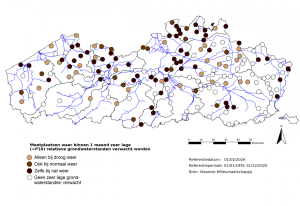
Bron: https://www.dov.vlaanderen.be/page/actuele-grondwaterstandindicator
Do you have any questions?
Contact Sander.bombeke@harvestis.be / 015 30 00 60
or visit us at Harvestis Sint-Katelijne-Waver
You can find information on the following websites:
- Water-level-controlled drainage systems
- Groundwater levels
