ENERGLIK brings climate-neutral greenhouse horticulture one step closer to becoming a reality
Greenhouse horticulture is known as an innovative and forward-thinking sector. At the same time, it faces a major climate challenge: CO₂ emissions must be drastically reduced by 2030, with the ultimate goal of achieving a climate-neutral sector by 2050. As part of the Interreg Flanders-Netherlands project ENERGLIK, 11 Flemish and Dutch partners joined forces to take concrete steps towards this objective. Bram De Kort from Interreg highlighted the project at the closing event: “Interreg encourages cross-border cooperation and supports strong projects that deliver added value for people, the economy and the planet. ENERGLIK is an excellent example of this.” The project focused on the development of four innovative technologies capable of reducing CO₂ emissions in greenhouse horticulture. In addition to field trials, supplementary research was also carried out into the economic feasibility and environmental impact of these innovations.
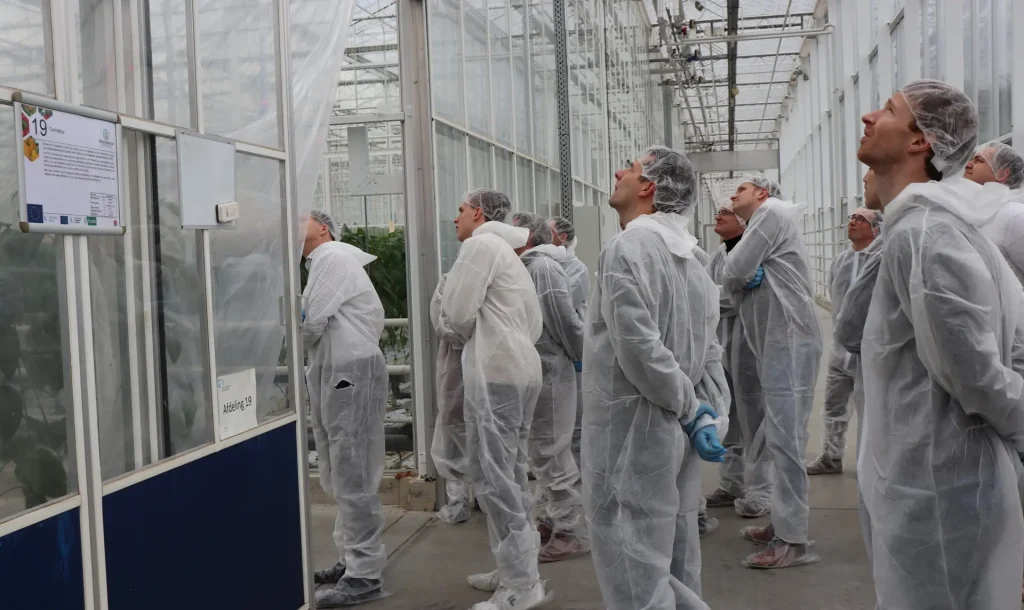
Four innovations to reduce CO₂ emissions
Four new innovations were developed as part of the ENERGLIK project. For example, a CO₂ capture system was devised that captures, purifies and stores CO₂ from the heating system for later reuse in crop production. This allows the heat demand and CO₂ supply to be decoupled from one another. The technique used for this is Pressure Swing Adsorption, or PSA for short. Jan Creylman of Thomas More explains: “PSA is a low-tech method for concentrating CO₂ from flue gases; it can be easily combined with a CHP system and is inexpensive, safe and scalable.”
A second innovation focused on the development of new screen materials that provide better insulation for the greenhouse, thereby reducing heat loss and significantly cutting CO₂ emissions. The focus is on the screens’ properties. “It has been scientifically established that growers were correct in their view that dehumidification through the screen is highly efficient,” explains Filip Bronchart of Ghent University.
A third innovation focused on energy-efficient active dehumidification systems. These systems remove moisture from the greenhouse without opening the windows, thereby preventing energy loss. Filip Bronchart of Ghent University: “Within Energlik, we have explored the possibilities for energy-efficient dehumidification of greenhouse air in horticulture, based on tried-and-tested techniques from other sectors.”
Finally, sensors were developed that can detect fungal spores. As energy-efficient cultivation often means that windows remain closed for longer, the risk of fungal diseases increases. “We have previously used biosensors successfully to detect bacteria and molecules, but this proved to be a greater challenge with fungal spores. Using surface imprinting and electropolymerisation, we have nevertheless found two ways to make this possible for mould spores as well,” explains Bart van Grinsven. These sensors could perhaps be used in the future to monitor fungal pressure accurately, enabling timely intervention.
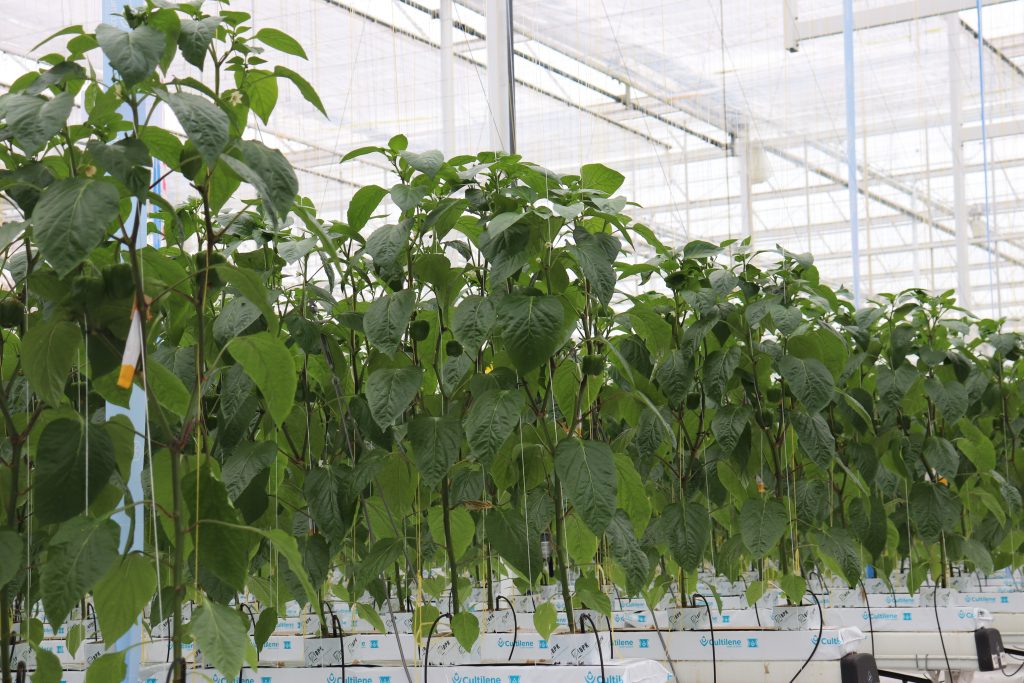
Innovations tested in practice
Various innovations were extensively tested in practice. New screen materials were developed, assessed and selected on the basis of their insulating performance. The screens offering the best insulation were then used in cultivation trials with tomatoes, peppers and cucumbers, in which up to three screens were combined per crop. Various types of dehumidification systems were also designed, built and installed, utilising sensible heat recovery or heat pumps. Combined with energy-efficient climate and screen control systems, these measures resulted in significant energy savings across all crops without any loss of production. Furthermore, a trial in a commercial tomato greenhouse demonstrated that more intensive use of multiple screens, both during the day and at night, can significantly reduce energy consumption. Grower Jelle De Ryck of Tomerel speaks highly of his experience: “In 2025, we didn’t need to switch on our gas boiler, whereas in 2024 – despite the warmer spring – we did. This was made possible by the double energy screen and more intensive use of the screens.”
Shades offer the greatest potential
Economic and environmental assessments show that shades currently offer the greatest potential for steering greenhouse horticulture towards climate neutrality. They require a relatively modest investment and deliver significant heat savings, particularly in all unlit crops. When combined with energy-efficient dehumidification systems, CO₂ emissions are reduced even further. “Dehumidification systems reduce the environmental impact, but high efficiency is essential for this,” explains Luis Corbala Robles of ILVO. Economic feasibility depends primarily on investment costs.
For the other innovations, the economic and environmental benefits are as yet even less clear, partly due to high investment costs and the need for further research. These factors will help determine which technologies will become widely adopted in practice in the future. The project has once again clearly demonstrated that energy-efficient crop management (higher relative humidity, more screen hours) leads to significant savings, something that does not require any additional investment from growers. This is further emphasised by Silke Hemming of Wageningen University and Research: “Accepting a higher RH, using a heat pump for dehumidification and installing more screens with better energy-efficient screens make the most significant contribution to energy savings in fruit vegetable production.”